
Every plate. Every fact.
And where it came from.
One plate gives you the car's official history, the checks that matter, and what it is worth.
What the report checks 10 checks
Every registered NZ plate resolves through NZTA Rightcar (make, model, generation, year, engine, origin, safety and emissions). Cars in Turners stock add the CIN and listing. Odometer history, WOF and licence status, owners and money owing switch on with Motochek and PPSR.
Six parts. One plate.
Pick a part to see what the full report says about this 2023 Ford Ranger, $49,990 at Turners.
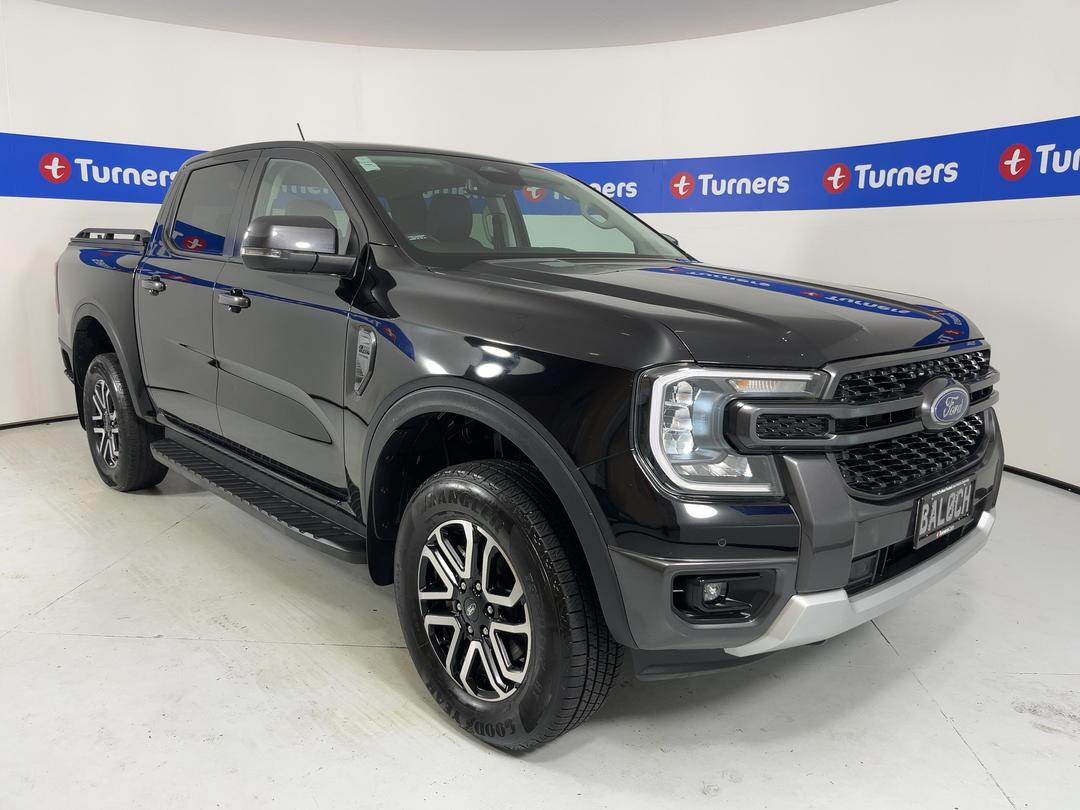
This is the car every tab below is about. Open its full sample report.
1 thing counts against it, 8 clear, 8 waiting on the register connection.
9 of 17 checks could run
Scores the record, not the car. Points come off facts a named source stated; a check that could not run costs nothing and lowers the confidence instead.
Grey "waiting" rows are register and PPSR fields that switch on when the NZTA Motochek and PPSR accounts are connected. Nothing is estimated in their place.
$250 to $7,000
$450 to $1,200
$350 to $2,200
$250 to $1,600
$300 to $1,000
AI-compiled by claude-opus-5 for our database on 2026-09-18 16:01, not measured from workshop data. Indicative, not a quote.
Not in that number: Registration and licensing, Warrant of fitness, Insurance, Servicing and tyres. Nobody publishes a figure, so none is invented.
Band $41,600 to $55,800, fitted to 61 cars Turners is asking for today. What Turners is asking for the model, not a valuation and not an offer.
The position above rolled forward at the market fit's rates for utes, 4.6% a year plus 0.3% for diesel and 2.6% per 10,000 km, fitted across 361 utes of every model Turners lists, 2003 to 2026, each model's own level taken out; at this car's 9,996 km a year (44,981 km, 64,973 km, 84,965 km). A conservative reading takes the low end of each band: $38,600, $33,200, $28,600. It is what older cars like it are asking at Turners today, not a prediction of a future market: a model change or a wave of used imports moves it.
No per-lookup fee. NZ Police stolen list, NZTA Rightcar and Turners listing pages are all free to read. A change is reported only between two values a source actually stated, so a source outage never shows up as "it changed".
Watch BAL0CHBuilt from the saved report for BAL0CH, generated 22 Sep 2026 21:41. Open the full sample report to see every line with its source.
From the plate to a
decision in three steps
Any NZ plate, a Turners ref or a listing URL. It resolves through NZTA Rightcar, the Turners listing and the NZ Police stolen list, and the register and PPSR as those accounts connect.
Stops come first, then every check with its value, its source and its status. A line that could not run says so in grey. Nothing is estimated into a gap.
A record score with its confidence, where the car sits against Turners stock, the faults this engine is known for, and what three years will cost. Then watch the plate for free.
Sourced, never estimated
Every value on a report traces to a named source, and every row carries a status: extracted, inferred or waiting. A field the connected accounts cannot read yet renders grey with the exact list of what unlocks it, and nothing is ever estimated into its place. Owner names are never carried. The one AI-compiled thing on the page, the fault list, is labelled as such and cannot name a fault that is not already in the database.
NZ Police, NZTA Rightcar, the Turners CIN, the register. The source is printed beside the value, on every row.
A register field the account cannot read yet renders grey with what unlocks it. A wrong fact is worse than a blank, by a lot.
A report on the record, not an inspection of the car. It never replaces a mechanical check, and it says so.
9,210 documented faults,
across 59 makes
551 models. The number on each make is how many of its models carry a researched fault list. Make names and marks belong to their owners and identify the make only.
 Toyota64
 Nissan40
 Mercedes-Benz34
 Mazda31
 BMW29
BMW29 Honda24
 Hyundai21
 Holden20
 Mitsubishi20
 Ford19
 Suzuki19
 Audi17
 Volkswagen17
 Kia16
Kia16 Lexus14
 Peugeot11
 Volvo11
 Subaru10
 Isuzu8
 Land Rover8
 Skoda8Hino7
 Jaguar6SsangYong6BYD5Jeep5LDV5
 Mini5Mitsubishi Fuso5
 Chevrolet4
 Dodge4GWM4
 MG4
MG4 Chrysler3
 Daihatsu3
 Fiat3Great Wall3Haval3
 Porsche3
 Renault3
 Scania3
 Tesla3
 Citroen2Foton2Fuso2Iveco2Kenworth2Mahindra2
 Alfa Romeo1Chery1Cupra1DAF1Freightliner1GWM Haval1Jaecoo1Nissan Diesel1Omoda1
 Polestar1
 Ram1
Ram1What it is likely to be
worth next year, and in five
Every report rolls the car’s position forward at the rates the market fit finds in Turners’ own stock. For this 2023 Ford Ranger, utes lose about 4.6% of their asking price a year, diesel adds 0.3% to that, every 10,000 km takes off another 2.6%, fitted across 361 utes of every model Turners lists, 2003 to 2026, each model’s own level taken out, at this car’s 9,996 km a year.
Where a car of this age and odometer sits among what Turners is asking today. It is what older cars like it are asking now, not a prediction of a future market.
One standard deviation either side. A conservative reading takes the low end of each band, and the report prints those figures too.
A model change or a wave of used imports shifts the whole curve. The report says so beside the number rather than pretending the curve is a law.
Position now, the band behind it, and the horizons the report prints. Every point is a figure the report computed; the home page draws nothing of its own.
Used car checks, answered
What does a check cost?
Seeing the car is free: the plate resolves through public sources and nothing is charged for it. Register and PPSR lines switch on as those accounts connect, and their cost is printed on the line that uses them.
Which cars can it check?
Every plate on the NZ register resolves through NZTA Rightcar. A car in Turners stock adds its listing and Consumer Information Notice. A Turners ref or listing URL works in the same box as a plate.
Where do the common faults come from?
From a documented database of known issues for each make, model, generation and engine, compiled with AI from published sources and marked as such on the report. A car is only shown faults that apply to its own generation and engine, and a list can never contain a fault that is not already in the database.
Is the record score a rating of the car?
No. It scores the record. Points come off facts a named source stated; a check that could not run costs nothing and lowers the confidence instead. A high number with low confidence means nothing we can see counts against it, not that the car is clean.
What is a plate watch?
The same checks run on a schedule and the page speaks only when something actually changed: the plate hits the stolen list, the registration stops resolving, the asking price drops. A source outage never shows up as a change. The free tier costs nothing to run.
Does it replace a mechanical inspection?
No, and it says so on every report. It tells you what the record and the known faults say to look at. The car itself still needs eyes on it.